
MULTIDISCIPLINARY CARE
When therapy and psychiatry share a patient, they should share a chart
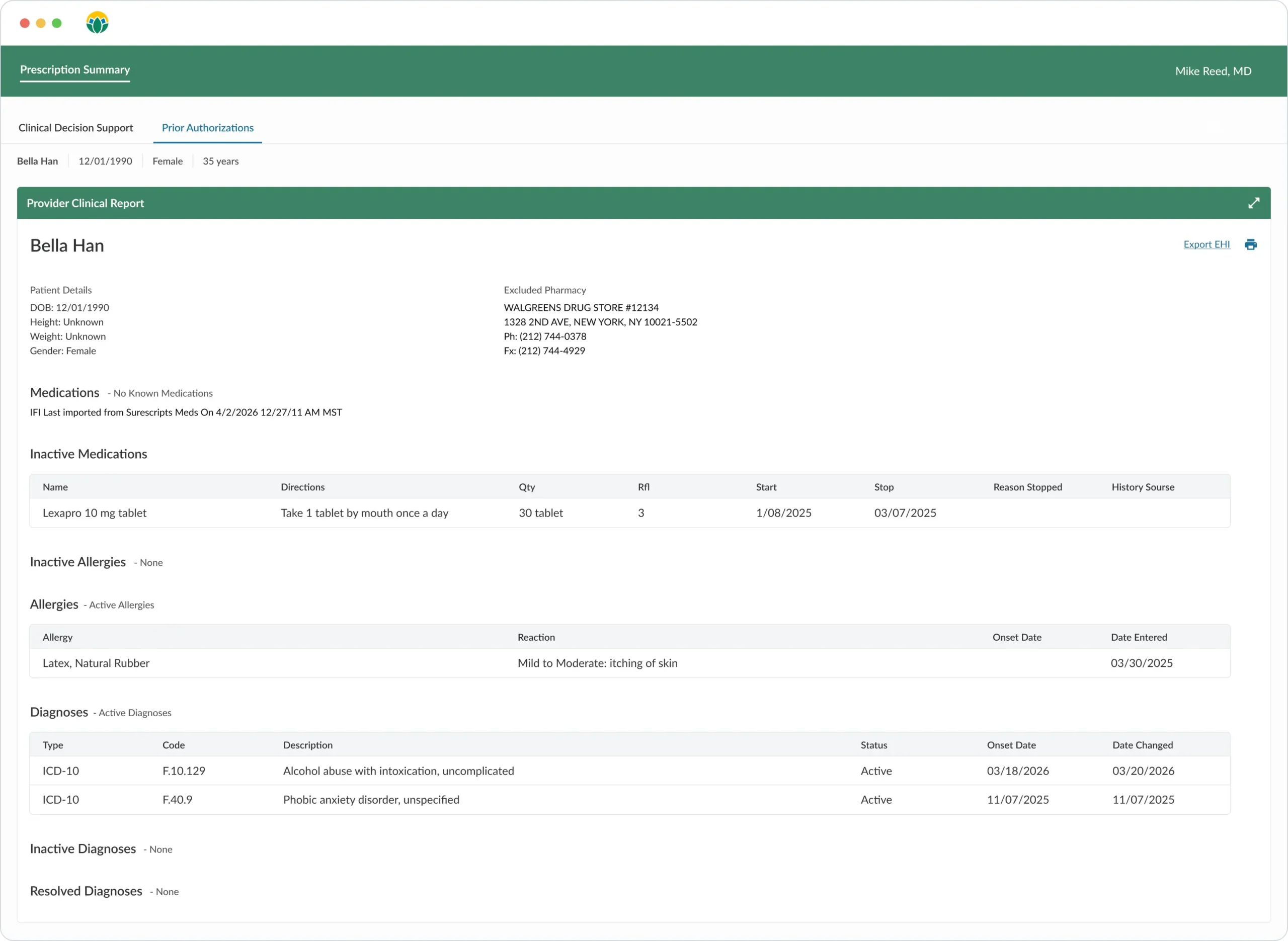
Integrated care only works when every provider on your team sees the same clinical picture. ProsperityEHR gives your therapists, prescribers, and nurses a single shared record, so medication changes surface in therapy sessions, care plans stay current across disciplines, and the documentation shows the coordinated care you actually delivered. Your team spends time on patients instead of tracking down information.
HIDDEN COSTS
Siloed systems create clinical risk
When a psychiatrist adjusts a medication and a therapist doesn't know until the next session, things get missed. When a care plan lives in one system and ePrescribing lives in another, your team spends time reconciling records instead of treating patients. And when billing logic doesn't account for multidisciplinary encounters, revenue leaks before anyone notices.
This is what happens every day in practices running therapy and psychiatry through disconnected tools. ProsperityEHR was built for built for integrated care and interoperability, so information moves across your team and out to referral partners and payers instead of sitting in separate systems. That matters clinically, and it matters with payers, who increasingly pay for proof that the care was delivered and coordinated, not just billed.
-
The efficiency in being able to go into our EHR, look at a patient's record, look at the claims data, and organize the claims in ways that we can respond more efficiently is a significant improvement.
Founder and Executive Director
Psychosocial and Behavioral Rehabilitation Firm

ONE CHART ACROSS PROVIDERS
Your whole team works from the same clinical picture
In ProsperityEHR, a psychiatrist's medication adjustment is visible to the therapist before the next session. A therapist's note about a new symptom surfaces in the prescriber's chart review. Every provider works from a single, continuously updated patient timeline, including therapy notes, medication history, outcome scores, and care plan goals in one place.
BUILT FOR EACH DISCIPLINE
Every provider gets the access they need
-
Explore ePrescribe
For prescribers
Complete a medication evaluation with built-in drug interaction checks, Abnormal Involuntary Movement Scale (AIMS) assessment, and one-click EPCS. Active prescriptions, allergy alerts, and relevant therapy notes are visible within the encounter, giving your prescribers the clinical context they need without having to dig through a separate system.Explore ePrescribe
-
See outcomes tracking
For therapists
Access the medication list and allergy alerts directly within session notes. Track validated measures like PHQ-9 and GAD-7 alongside medication adjustments over time, so you can see how a patient's medication is affecting their therapeutic progress and produce the outcomes data payers ask for.See outcomes tracking
-
See RCM capabilities
For billing teams
Coding Assistant suggests procedure codes while the clinician documents, so charges are captured accurately at the point of care rather than reconstructed later. ProsperityEHR links claims to clinical documentation and checks insurance eligibility before the claim goes out. This allows billing teams to catch coding errors proactively rather than chasing denials after the fact.See RCM capabilities
FLEXIBLE WORKFORCE
Use your full care team, with oversight built in
Multidisciplinary care means working across provider types and licensure levels: psychiatrists, prescribers, therapists, and clinicians still working toward independent licensure. ProsperityEHR helps you use that full team without loosening oversight or taxing your most experienced providers with review that isn't needed.
Most EHRs decide who cosigns a note based on who wrote it, so every note from a supervised clinician routes for review. In ProsperityEHR, your practice defines what needs an extra signature, who signs, and in what order using Signature Policies based on the things that actually drive review, including the payer, the provider's licensure or certification, the facility location, and the type of note or documentation. When a payer contract or a federal or state regulation changes, a practice administrator can update the rule inside the application within minutes, no support ticket required.
Cosigners and reviewers can leave feedback tied to the exact section that needs it, and your audit trail records reviewer names, credentials, signing order, timestamps, and a verifiable signature hash you can export in seconds. That's how you expand access to care across your team while keeping the documentation that substantiates medical necessity and protects you in an audit.
SEAMLESS COMMUNICATION
Critical updates reach the right people quickly
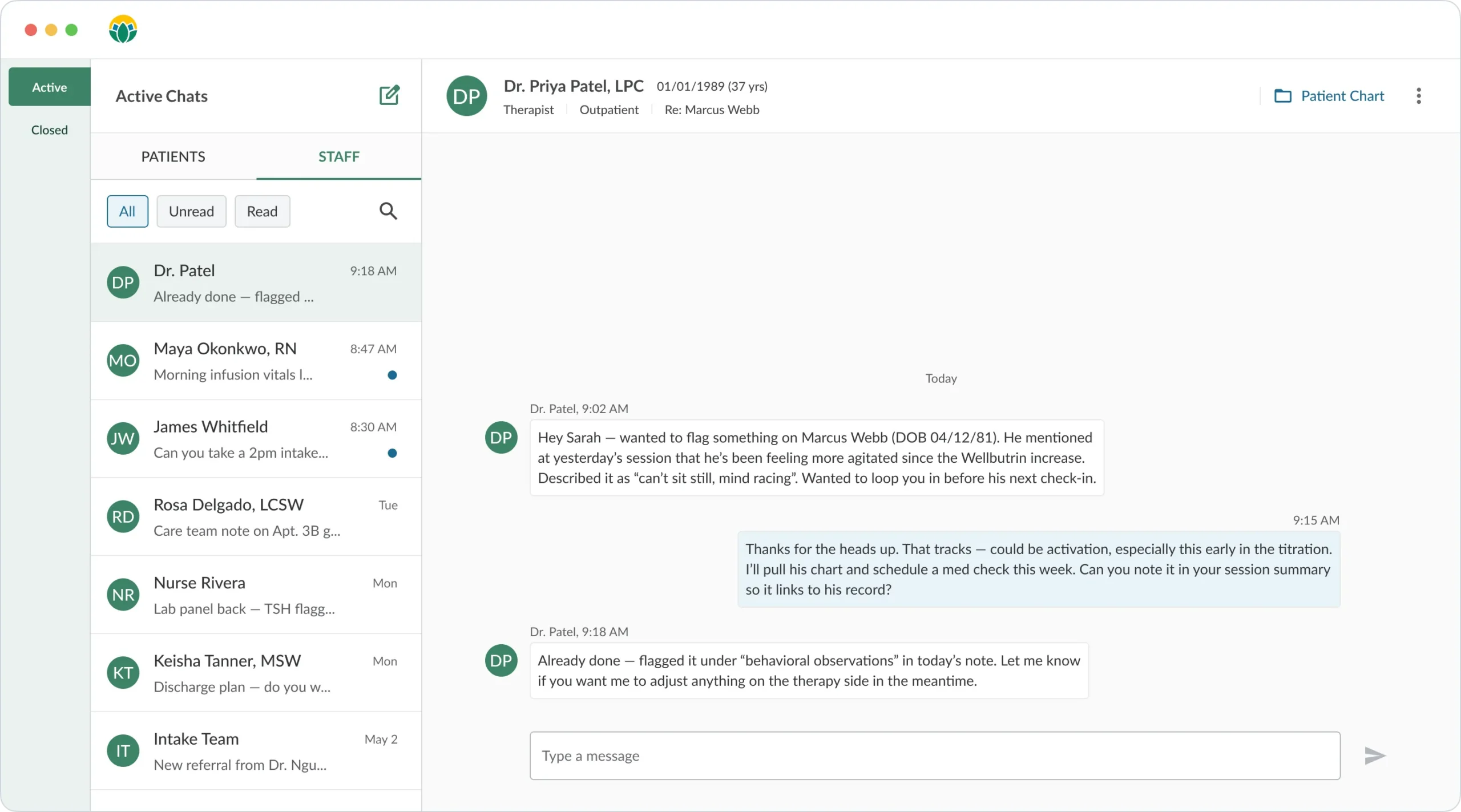
Our system makes communication between providers easy. A nurse flags abnormal vitals. A therapist has a question about a new prescription. A care manager needs to confirm a step-down plan. Those conversations happen inside the record, stay visible to the right people, and create a permanent thread of clinical collaboration.
GROWING PAINS
Add providers, service lines, and locations without rebuilding your infrastructure
Whether you're bringing on your first prescriber or coordinating care across multiple locations, ProsperityEHR scales without a system overhaul. Role-based permissions control exactly what each provider sees across licensure levels, so therapists access what they need, prescribers access what they need, and your billing team works from a centralized view across every site.
Practices that do integrated care well tend to grow. ProsperityEHR grows with them.
FAQs
Common questions for behavioral health practices that provide multidisciplinary care
Yes. ProsperityEHR's ePrescribing feature is fully EPCS-certified and integrated directly into the clinical workflow. It handles the security requirements for controlled substances while keeping the process fast and intuitive. Learn more about ePrescribing →
Yes. Role-based permissions give you granular control over chart access. A therapist can see the active medication list and allergy alerts without accessing detailed psychiatric evaluations. A billing team member sees what they need for claims without touching clinical notes. You configure access based on what each role actually requires. Learn more about care coordination →
Yes. ProsperityEHR handles multidisciplinary teams across multiple locations. This includes centralized billing and scheduling at the administrative level, with each care team working from a unified patient record. Learn more about multi-site capabilities →
Each discipline has its own specialized templates. A therapist's SOAP note and a psychiatrist's medication management note look and function differently because the work is different. Both live in the same patient timeline, which means your whole team sees the clinical narrative without anyone having to piece it together from separate records. Learn more about documentation →
Yes. Outcomes tracking lets you overlay medication changes with symptom scores across time. Your clinical leadership gets a data-driven view of which treatment combinations are producing the best results — and your therapists can see in real time how a recent medication adjustment is affecting a patient's therapeutic progress. Explore outcomes tracking →
The transition happens within ProsperityEHR. Internal referrals keep the patient's history, goals, and previous notes attached to their profile through the handoff. The receiving provider has everything they need before the first appointment. Learn more about care coordination →
Yes. Supervisors can review and co-sign notes and oversee caseloads, and role-based permissions keep each provider in the right part of the chart. That lets you use a broader care team while keeping the documentation and oversight that support quality and reimbursement.
No, not unless your rules say so. With Signature Policies, co-signature requirements attach to the documentation, not the person, so review can differ for two notes from the same clinician based on the payer, the provider's license, the location, and the type of note or documentation. Your practice sets the rules and edits them in the application when a contract or regulation changes, so supervisors review what actually needs review instead of everything.
Payers increasingly pay for proof, not just claims. Because therapy, medication management, and outcomes live in one record, you can show coordinated care was delivered and pull outcomes data by provider or program when you need to substantiate medical necessity or bring evidence to a rate conversation.
Ready to make the switch?
See what to expect and how to prepare when you migrate to an EHR platform built for practices like yours.